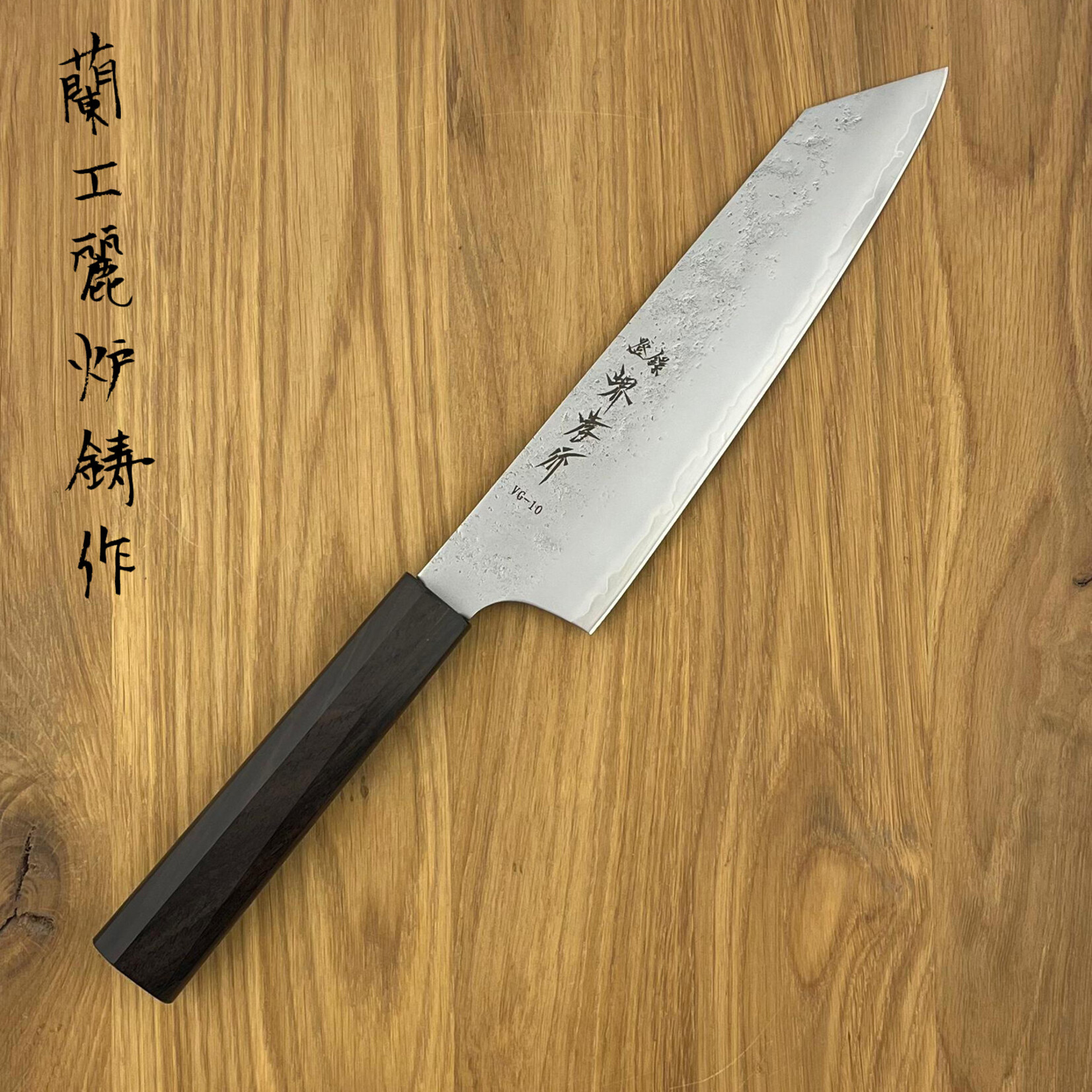
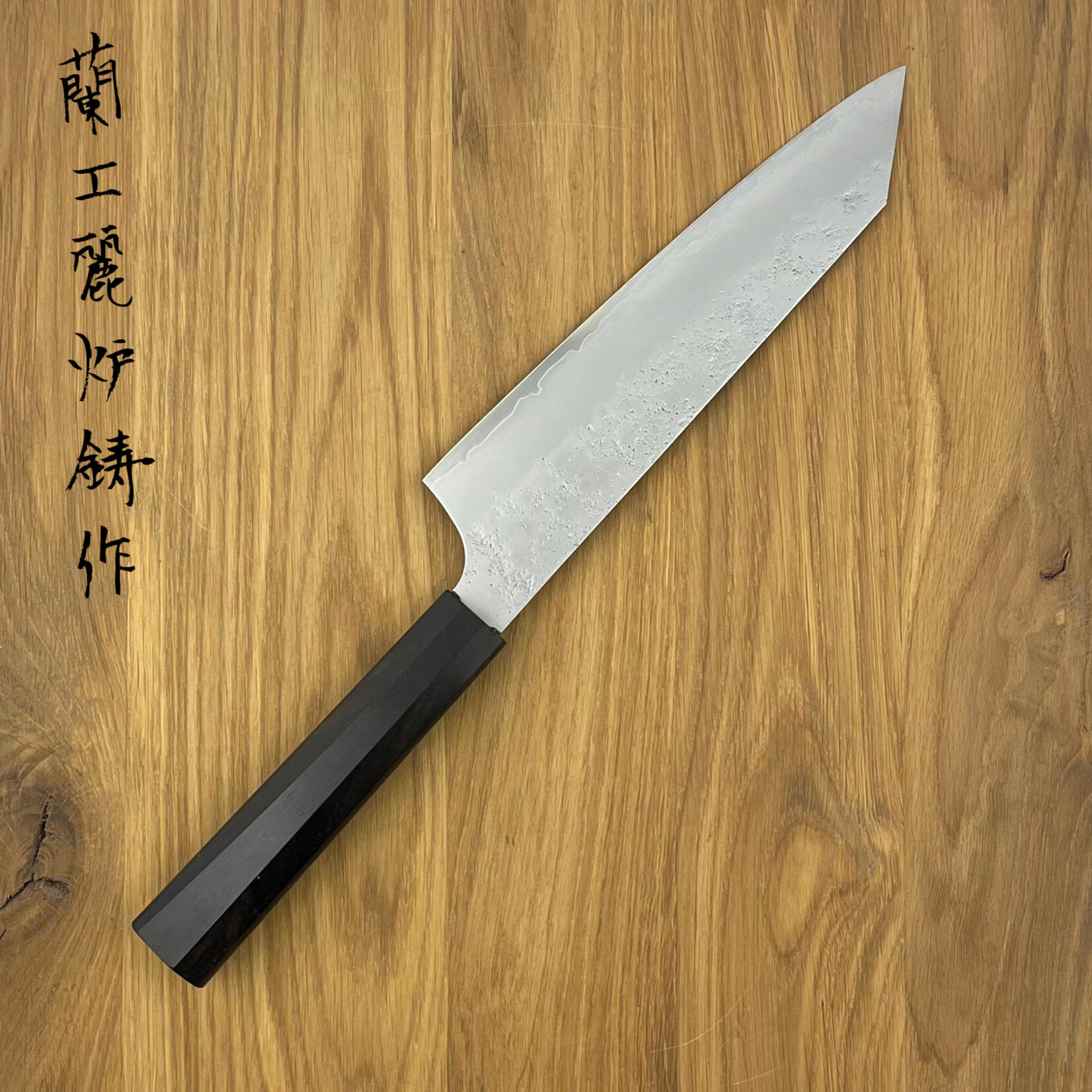
Kengata • 190 mm • VG-10 core with nashiji finish • Japanese ebony handle • for both left and right-handed use
Features of the Nashiji VG10 series
Nashiji, pear skin, a nice description to describe the structure of the stainless steel outer layer. It gives the knife a slightly raw look, the product you cut will "stick" to it less, but actually it is mainly applied for aesthetics. Thanks to the modern elliptical ebony handle, the knife is nicely balanced. Ebony is already slightly heavier, which is nice in the hand feel. The beautiful dark deep brown black color gives a luxurious look.
VG-10 is a high-quality stainless steel type, which has become known for its exceptional balance between strength, sharpness and corrosion resistance. It is distinguished by its ability to maintain a high sharpness and at the same time is relatively easy to sharpen. The “VG” in VG-10 stands for “Very Gold 10,” a nod to the gold standard quality of knife steel. VG-10 steel is readily available, easy to forge for the maker, and has the desired properties of strength, sharpness, and excellent retention for the end user.
VG10 – Takefu – Steel
Very Gold 10, better known as VG10, is one of the most common steel types on today’s knife market. The steel is produced by Takefu Special Steel in Echizen, Japan. VG10 is popular with both knifemakers and users thanks to its well-balanced combination of performance and ease of use.
It is a stainless steel with a high carbon content, alloyed with elements such as chromium, molybdenum, vanadium, and cobalt. Chromium provides corrosion resistance, while vanadium contributes to wear resistance during intensive use.
Although VG10 is widely used, there are clear differences in quality and performance. During the production process, various techniques can be applied to make the steel harder and refine its structure. Factors such as additional ingredients, the hardening process, and heat treatment all play an important role. In addition, the knowledge and skill of the knifemaker during the grinding process are crucial for the knife’s final sharpness and cutting performance.
At Slijperij Rangelrooij, we are big fans of VG10 steel. It can be brought to a very high level of sharpness and retains that sharpness for a long time. Despite the wide availability of VG10, we always pay close attention to blade geometry as well. Both aspects are extremely important and can strongly enhance each other—something our makers clearly distinguish themselves with compared to others.
Elwin de Veld about the knives of Sakai Takayuki
We usually start our trips to Japan in Osaka, from where we take a Shinkansen (a bullet train) to Seki, in Gifu prefecture. We start in Sakai, in south of Osaka, where we always recieve a warm friendly welcome from Aoki san and Ogawa san from Sakai Takayuki. In recent years the customers in our shop have been asking for special Japanese traditionally forged knives: Yanagiba, Sakimura, Kengata: all the names of models which are used in Japanese kitchens for preparing various sorts of fish. Sakai Takayuki is my key which opens the door to the world of traditional Japanese knives and to top it all, their product range is targeted for the western market. For making of the traditional Japanese knives Sakai Takayuki employs the best of the best: Itsuo Doi and Kenji Togashi, among others. The blacksmith Yamatsuke san, with his stable hand on the Kaiten Toshi (Japanese water stone), is a guarantor of an exceptionally sharp finish. Sakai Takayuki buys lots of their steel from the Aichi steel (their headquarters are situated close to Nagoya) and works among other with carbon steel shirogami white and aogami blue. A nice detail: the colours in the names of the steel have nothing to do with the colour of the steel itself- it's just the colour of the packing in which the raw steel is being stored in the factory. The western models are manually finished at the company's quarters in Osaka (sharpening), but largely manufactured in Seki, in Gifu prefecture. The finish and the quality is sublime- just what we can expect from Takayuki.