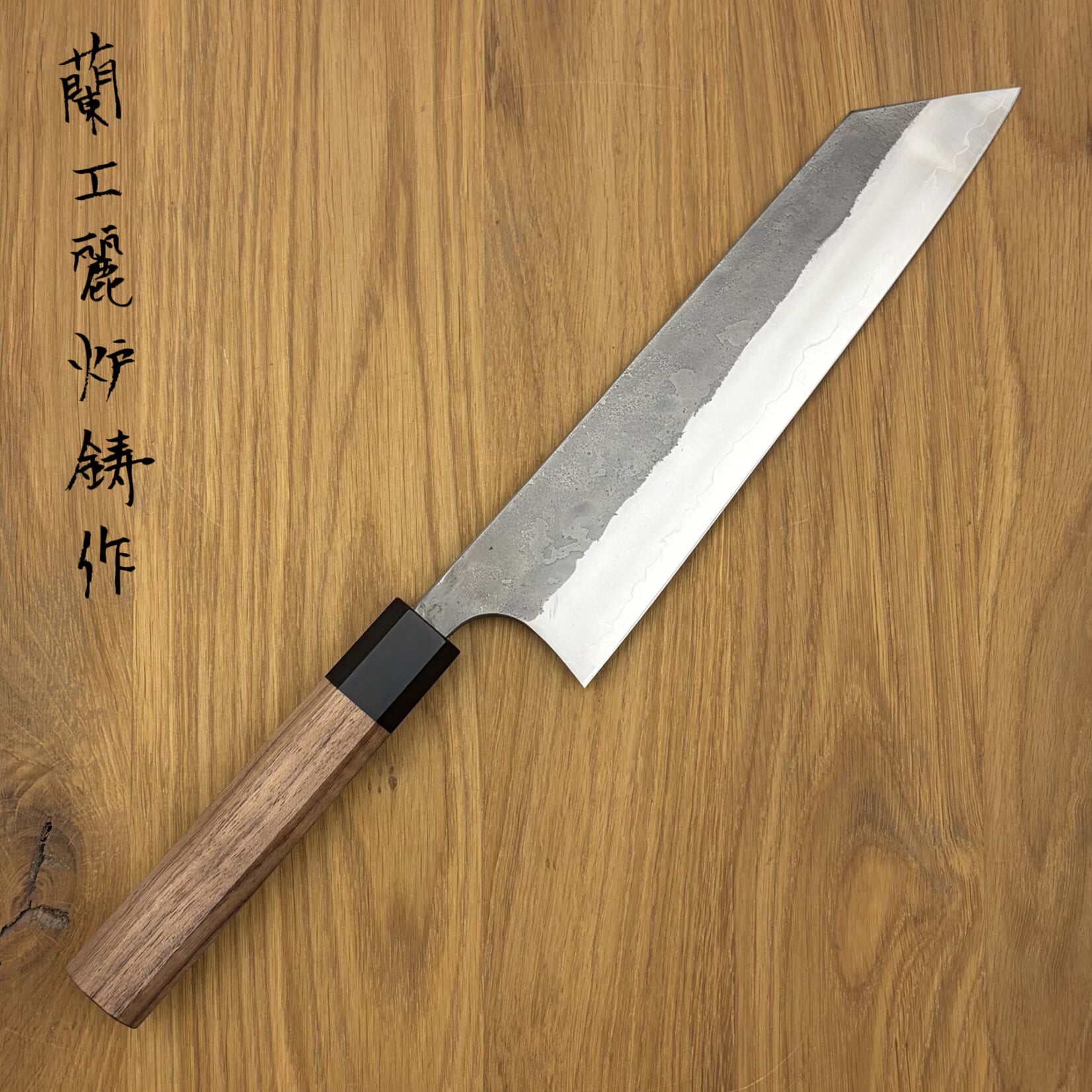
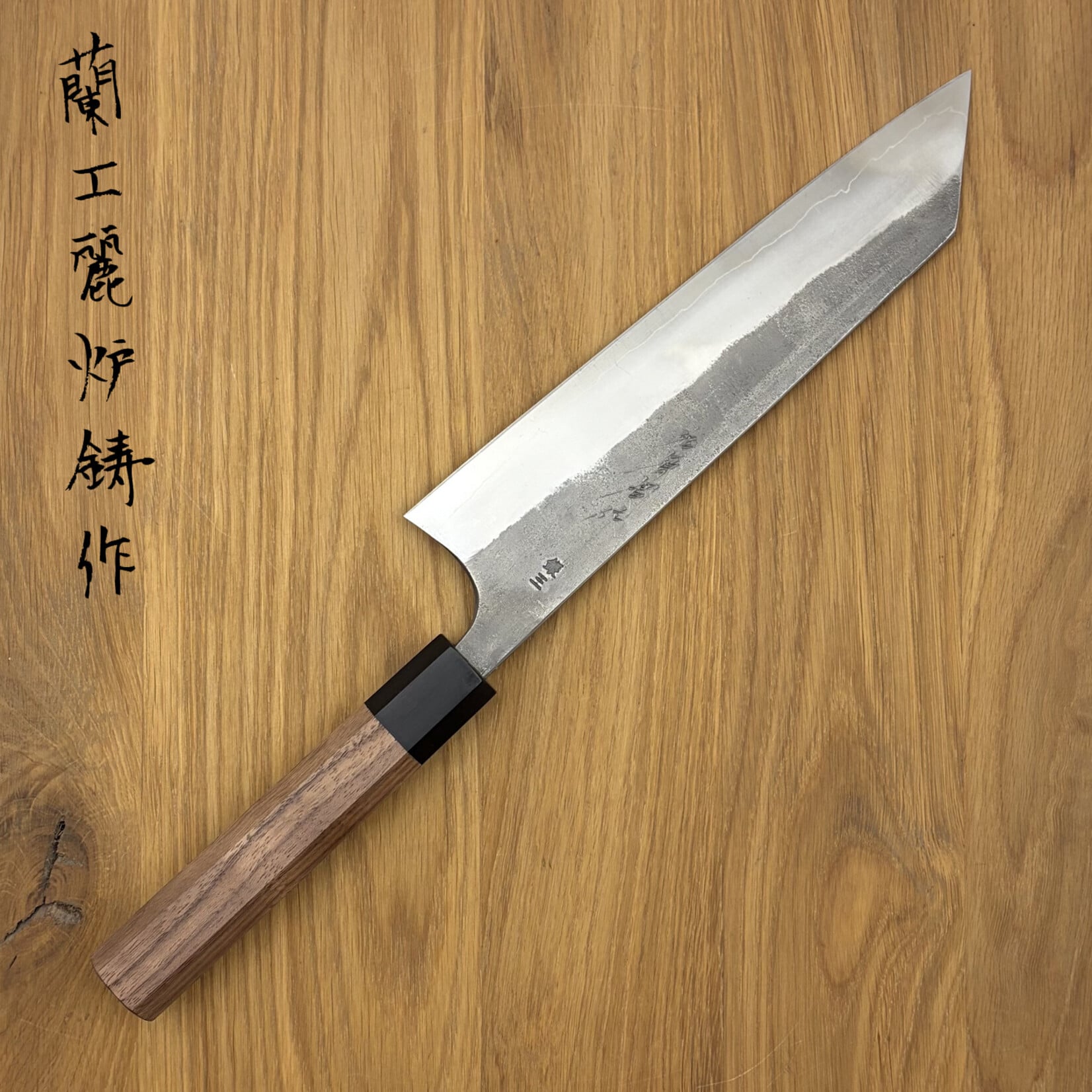
Kiritsuke • 210 mm • Ginsan steel • Japanese walnut handle • Suitable for both left- and right-handed use
A fully handmade knife by Shu Matsubara, forged by fourth-generation blacksmith Katsuto Tanaka and his son Hiroki. The blade is made from Ginsan steel and is hand-ground, resulting in an exceptionally thin edge and very little resistance when cutting. This allows the knife to glide through food with virtually no effort. The blade features a nashiji finish, a traditional Japanese finish with a subtly textured surface reminiscent of the skin of a pear. The small irregularities give the blade a distinctive and rugged appearance.
What makes these knives particularly special is their taller blade profile. Combined with the Japanese-style handle, the additional blade height places the balance point noticeably further forward. The extra blade height also contributes to stability while cutting.
Matsubara knives are known for their rugged, authentic appearance. Each blade visibly bears the marks of the traditional forging process, giving it a unique character. These are not machine-produced knives, but knives in which the craftsmanship of the blacksmith can literally be seen. No two hammer strikes are exactly the same.
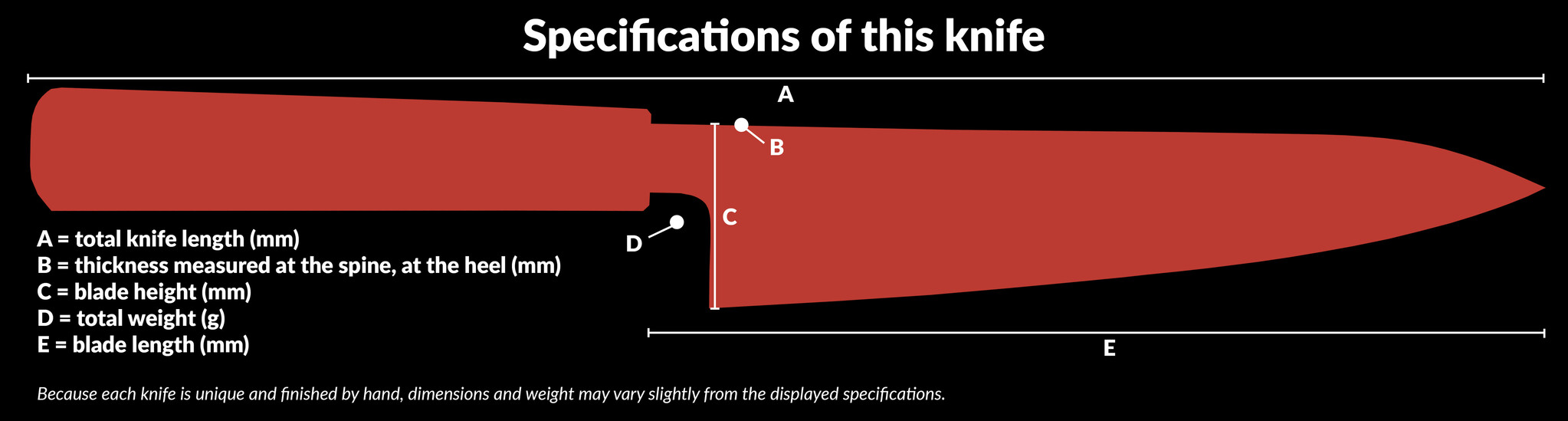
A=365mm B=2.8mm C=50mm D=195gram E=210mm
Ginsan
Ginsan is a Japanese semi-stainless steel known for its fine and refined grain structure. This allows the steel to be sharpened to a very high level of sharpness while retaining its edge for a long time. At the same time, Ginsan is relatively easy to sharpen again, making it a popular steel among both professional chefs and enthusiastic home cooks. The steel is produced by Proterial, formerly known as Hitachi Metals. Proterial produces a range of high-quality Japanese steels, including carbon steels such as White Steel, Blue Steel and Yellow Steel, as well as semi-stainless and stainless steels.
Ginsan is often compared to VG10. Both steels can reach a similar level of hardness and offer a good combination of sharpness, edge retention and ease of maintenance. One of the main differences lies in their composition and structure. Ginsan is known for its fine carbide structure, which generally makes it very pleasant and controlled to sharpen.
In practice, Ginsan is therefore highly valued for its combination of excellent sharpness, good edge retention, relatively easy maintenance and pleasant sharpening characteristics on a whetstone. It offers an attractive alternative for those looking for the properties of a modern stainless steel while also placing a high value on how easily a knife can be kept sharp.
Elwin de Veld about Matsubara
Matsubara Hamono originates from Nagasaki, a region with a centuries-old tradition of producing Japanese knives and swords. The Tanaka family continues this tradition to this day. Katsuto Tanaka has spent more than twenty years dedicating himself to traditional Japanese forging techniques, carefully executing every step of the process with great precision and attention to detail. The combination of traditional craftsmanship, high-quality Blue #2 or Ginsan steel, and the distinctive geometry of the blades makes Matsubara knives particularly appealing to those who value sharpness, control, character and craftsmanship.